
 Introduction
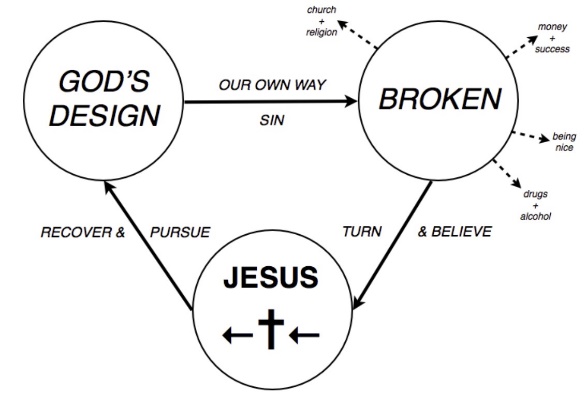
In 1956 Campus Crusade for Christ published “The Four Spiritual Laws”. It was the result of a collaboration between two Christian men who were attempting to come up with a simple explanation of the Gospel. These 4 laws have been re-presented in numerous ways in countless books and evangelistic tracts across the globe to this day. The “Bridge Illustration” and “Three Circles” are two widely used examples.
The 4 spiritual laws have been universally accepted as a useful and true presentation of the Gospel. But they lead to a disturbing question.
Did Jesus preach the Gospel? This is not such a ridiculous question as it sounds. After all, Jesus had not died on the cross for the forgiveness of our sins and the Holy Spirit had not been poured out to fill us with God’s presence. I was taught that Jesus lived pre-new Covenant, and therefore He and the 12 disciples could not preach the Gospel. Only after Pentecost could the Gospel be proclaimed. The conclusion is that our four Gospels, are not in fact the Gospel at all!
I now reject this teaching and have taken several years searching the New Testament to try and discover what was the Gospel that Jesus preached. Be warned! The journey is difficult, shocking and perilous. Difficult, because we are so conditioned to understand the Gospel through the lens of the 4 spiritual laws, that we cannot conceive of the Gospel in any other way. Shocking, because the central theme of all our preaching and worship – the Cross - is missing from the Gospel Jesus preached. And perilous, because to accept and adopt the Gospel Jesus and the Apostles preached requires the abandonment of the 4 Spiritual Laws as representing the Gospel. So, what is the Gospel?
Jesus’ Gospel
What do these scriptures tell us about the focus of the Gospel that Jesus preached? We start with DMM’s two favourite passages:
Luke 10:1,9 After this the Lord appointed seventy-two others and sent them two by two ahead of him to every town and place where he was about to go … Heal the sick who are there and tell them, ‘The kingdom of God is near you.’
Matthew 28:18-20 Jesus said, “All authority in heaven and on earth has been given to me. Therefore go and make disciples … and surely I am with you always, to the very end of the age.”
Consider also these:
Mark 1:15 Jesus said, “The time has come. The kingdom of God is near. Repent and believe the good news!”
Luke 4:18-19 Jesus said, “The Spirit of the Lord is on me, because he has anointed me to preach good news to the poor. He has sent me to proclaim freedom for the prisoners and recovery of sight for the blind, to release the oppressed, to proclaim the year of the Lord’s favour.”
John 12:31 Jesus said, “Now is the time for judgment on this world; now the prince of this world will be driven out.”
Lk 13:32 Jesus said, “I will keep on driving out demons and healing people today and tomorrow, and on the third day I will reach my goal.”
John 18:37 Jesus said, “You are right in saying I am a king. In fact, for this reason I was born, and for this I came into the world, to testify to the truth.”
Can you see any kind of theme? This is the difficult part. There is no mention of you and I obtaining salvation. You need to forget the 4-spiritual laws or 3-circles, or you will never see it!
A strong hint is found in the New Testament name for this Gospel: “The Gospel of the Kingdom”.
Paul’s Gospel
Paul had the advantage of preaching after the cross and Pentecost. We might assume that Paul’s Gospel was focussed on the Cross. After all, he wrote:
1 Corinthians 2:2 “For I resolved to know nothing while I was with you except Jesus Christ and him crucified.”
However, Paul is not talking about the Gospel content when he writes this. He is talking about his own heart of humility. “I came to you in weakness with great fear and trembling.” Luke tells us what Paul preached:
Paul entered the synagogue and spoke boldly there for three months, arguing persuasively about the kingdom of God. (Acts 19:8)
Paul preached the same Gospel that Jesus preached. The apostles called it “The Gospel of the Kingdom of God.”
There are 17 descriptions of the Gospel in the Acts. Only 3 mention forgiveness. The cross is mentioned 3 times, but each time merely as a pre-cursor to the resurrection! The universal theme is Jesus is King of God’s Kingdom on earth. This is the Gospel Paul preached to the end of his life. The last verse of Acts tells us:
Paul proclaimed the kingdom of God and taught about the Lord Jesus Christ—with all boldness and without hindrance!
We have discovered the theme of the Gospel that Jesus and Paul proclaimed. The heart of the Gospel, the Good News, is not salvation for sinners, but the presence of, and invitation to, the Kingdom rule of Jesus. Jesus’ struggle in making disciples was never in convincing them of their sin and need for forgiveness, but in believing that the Kingdom was at hand. That is why the disciples could not believe in the resurrection:
Mark 16:14 Later Jesus appeared to the Eleven as they were eating; he rebuked them for their lack of faith and their stubborn refusal to believe those who had seen him after he had risen.
John’s Gospel
John was Jesus’ closes disciple, and his Gospel is the most reflective of the Gospels, emphasising the divinity of Jesus. John declares the intention of his Gospel:
John 20:31 But these are written that you may believe that Jesus is the Messiah, the Son of God, and that by believing you may have life in his name.
John’s was the last of the gospels to be written, towards the end of his long life, after decades of proclaiming the Gospel and reflecting on its meaning. So if we want to discover what the Apostolic Gospel was, John is likely to be our best source.
Look through John’s gospel introduction (1:1-18) and note down everything that is “good news”:
John 1:1-5, 1:6-9, 1:10-13, 1:14-18.
How might you summarise this Gospel?
The theme is somewhat different to that of Jesus and Paul. It probably reflects a more pagan audience compared with the Jews and Gentile God-fearers that Jesus and Paul mostly preached to. It suggests that the way the Gospel is conveyed needs to reflect the culture we are engaging.
I think you will agree that John’s gospel theme it is strikingly different from the 4 spiritual laws.
The Scandal of the Cross
We now move to the shocking aspect of the Gospel Jesus preached.
In chapter 2, John relates the cleansing of the temple, along with Jesus speaking about his death and resurrection. John also comments on the disciples recalling this after the resurrection:
John 2:19-22 Jesus said, “Destroy this temple, and I will raise it again in three days.” They replied, “It has taken forty-six years to build this temple, and you are going to raise it in three days?” But the temple he had spoken of was his body. After he was raised from the dead, his disciples recalled what he had said. Then they believed the scripture and the words that Jesus had spoken.
This is a golden opportunity for John the evangelist to explain the role and meaning of the cross – but he doesn’t!
In John 3 after recounting Jesus’ meeting with Nicodemus, John gives us another commentary on the Gospel, showing us the heart of the apostolic Gospel. Note that there is not one mention of the cross:
John 3:16-21 For God so loved the world that he gave his one and only Son, that whoever believes in him shall not perish but have eternal life. For God did not send his Son into the world to condemn the world, but to save the world through him. Whoever believes in him is not condemned, but whoever does not believe stands condemned already because they have not believed in the name of God’s one and only Son. This is the verdict: Light has come into the world, but people loved darkness instead of light because their deeds were evil. Everyone who does evil hates the light, and will not come into the light for fear that their deeds will be exposed. But whoever lives by the truth comes into the light, so that it may be seen plainly that what they have done has been done in the sight of God.
The “light” theme is again very prominent. John’s summary of the Gospel in his first letter has a very similar construction:
1 John 1: 5,7 This is the message we have heard from him and declare to you: God is light; in him there is no darkness at all … if we walk in the light, as he is in the light, we have fellowship with one another, and the blood of Jesus, his Son, purifies us from all sin.
Instead of the Kingdom, which was an especially Jewish expectation, John presents the Gospel as God’s light shining in the world to dispense the darkness so that we can walk in it, receive righteousness, and so have fellowship with both God and each other. But whether we talk about God’s Kingdom or God’s Light, the Gospel is a proclamation and invitation to Him.
Luke was the closest of the Gospel writers to Paul. His Gospel is also self-declared as evangelistic. Luke records Jesus preparing His disciples for His coming death and resurrection.
Luke 18:31-33 Jesus took the Twelve aside and told them, “We are going up to Jerusalem, and everything that is written by the prophets about the Son of Man will be fulfilled. He will be handed over to the Gentiles. They will mock him, insult him and spit on him; they will flog him and kill him. On the third day he will rise again.”
All the Gospels record various occasions, like this, where Jesus talks about His coming death and resurrection. Yet in none of them does Jesus (or the gospel writer) explain the role of the cross.
The scandal of the cross, is perhaps, not that the Messiah was killed, but its absence from the Gospel that Jesus and the Apostles’ preached in evangelism. I believe we must come to a startling and shocking conclusion: The cross of Christ is not central to the proclamation of the Gospel, but a distraction from it.
Repentance and Forgiveness in the Gospel Message
Luke 24:47 Jesus said, “Repentance for the forgiveness of sins will be preached in his name to all nations.”
John 5:21 Jesus said, “For just as the Father raises the dead and gives them life, even so the Son gives life to whom he is pleased to give it.”
Repentance and forgiveness are regular themes in the Gospel Jesus preached. But curiously, the mechanism of forgiveness is rarely, if ever, explained. Jesus gives life to those He chooses! The consistent teaching, of both Old and New Testaments, is that righteousness is the reward of faith in God.
Secondly, convincing people of their sin and their need for repentance is not our job – that is the work of the Holy Spirit:
John 16:8 Jesus said, “When the Spirit comes, he will convict the world concerning sin and righteousness and judgment.”
Nowhere in the New Testament do we read of sin being preached, whether original sin or our sin. The messages is always the forgiveness of sin.
Explanations of the Cross
Jesus did teach about the cross:
Matthew 10:38-39 Jesus said, “Whoever does not take up their cross and follow me is not worthy of me. Whoever finds their life will lose it, and whoever loses their life for my sake will find it.”
Jesus uses the cross (not His cross, since he never told them He would die on a cross) to teach about humility. He chose not to explain its coming role in salvation.
The mechanism of forgiveness is generally left unexplained. Only once do we hear Jesus explain the role of the cross, privately to His devoted disciples:
Matthew 26:28 Jesus said, “This is my blood of the covenant, which is poured out for many for the forgiveness of sins.”
It seems likely that Jesus explained the cross to His disciples after the resurrection:
Luke 24:26-27 Jesus said, “Did not the Messiah have to suffer these things and then enter his glory?” And beginning with Moses and all the Prophets, he explained to them what was said in all the Scriptures concerning himself.
The apostles passed this explanation onto their disciples. Romans 3:20-26, 2 Cor 5:14-21 and 1 Peter 2:24-25 are the main apostolic explanations of the cross. But in each case they are explanations to believers, showing the confidence we can have in the Gospel, and do not describe the Gospel that the apostles preached.
The evangelical obsession with “legal” explanations of the cross started with John Calvin, a 16th century French lawyer. But Calvin’s ideas were largely theological rather than evangelistic.
The explanation of the role of the cross when attempting to “share the Gospel” was popularised in the 1950’s by Crusade for Christ, with the 4 spiritual laws. But more recently the Alpha Course has done much to popularise the legal explanations of the cross. Perhaps it will come as no surprise to discover that Nicky Gumbel, the author of the Alpha Course is also a trained lawyer from a line of eminent lawyers.
Proclaiming the Gospel
We come now to the perilous part. Can we abandon our distorted gospel that we have held and preached for so long? Have we got ears to hear and eyes to see the Gospel Jesus has given us to share? Let’s start with a well-known declaration from Paul:
Romans 1:16-17 For I am not ashamed of the gospel, because it is the power of God that brings salvation to everyone who believes: first to the Jew, then to the Gentile. For in the gospel the righteousness of God is revealed—a righteousness that is by faith from first to last, just as it is written: “The righteous will live by faith.”
This Gospel does not proclaim sin, but righteousness! Righteousness through faith, not forgiveness through the cross. But that is not all. The Gospel is power, not explanation! “it is the power of God”.
1 Corinthians 4:20 “The kingdom of God is not a matter of talk but of power.”
Act 26:18 I am sending you to them to open their eyes and turn them from darkness to light, and from the power of Satan to God, so that they may receive forgiveness of sins and a place among those who are sanctified by faith in me.’
Explaining the cross is not the gospel. Jesus’ work on the cross is not the gospel. Jesus Himself is the Gospel:
John 14:6 Jesus said, “I am the way and the truth and the life. No one comes to the Father except through me.”
Mattew 11:28-30 Jesus said, “Come to me, all you who are weary and burdened, and I will give you rest. Take my yoke upon you and learn from me, for I am gentle and humble in heart, and you will find rest for your souls. For my yoke is easy and my burden is light.”